Moving a household looks simple on paper. Box the dishes, wrap the sofa, rent a truck, and drive. The reality shows up the first time a wardrobe won’t pivot around a stair landing, or the moment a closing date shifts and you’re left with a truck full of furniture and no keys. Choosing between a do-it-yourself approach and hiring professional residential moving services is really a decision about risk, control, time, and the value of your own energy. It also depends on the distance, the layout of your home, your physical capacity, and the fragility of what you own.
I’ve packed entire three-bedroom homes over a weekend with a couple of friends and a borrowed pickup. I’ve also coordinated multi-stop, elevator-restricted apartment moves with a crew that treated every staircase like a chess problem. Both can be right. The trick is matching your situation to the approach that safeguards your belongings, your budget, and your sanity.
The real cost of a “simple” move
People fixate on the rental truck rate. That number rarely reflects the total cost of a DIY move. Add boxes, tape, bubble wrap, furniture pads, dollies, ratchet straps, fuel, mileage, tolls, and day-of incidentals like last-minute mattress bags or extra rolls of shrink wrap. Add lunch for helpers, ice, and, if you’re moving in summer, extra water. If you bruise a wall or scuff a hardwood stair tread, there is paint, filler, and time to repair before a landlord walk-through or a home sale closes.
Time has a price, too. Packing a typical two-bedroom apartment runs 30 to 40 hours if you do it carefully and label well. Loading and unloading that same household can take 8 to 12 hours without professional equipment or choreography. That’s before you clean the old place, drive across town, or make a second trip for the plants you forgot.
When you price professional moving services, the number you see includes a trained crew, equipment designed for residential moving, and the choreography that prevents your grandmother’s cedar chest from kissing the concrete. With a good team, a two-bedroom move can go door-to-door in three to six hours, often faster if there are no elevators or long walks from truck to door. The calculation is not only money, it’s how you want to spend your week and what margin of error you’re willing to accept.
How risk shifts between DIY and professionals
Every move has liability. The person who lifts the dresser assumes the risk of dropping it. The person who drives the truck assumes the risk of backing into a mailbox. When you move yourself, you are that person. Your auto insurance may not cover a one-way rental. The rental company’s collision waiver often excludes overhead damage, which, in practice, means you’re on the hook if you clip the corner of a carport or snag a low tree limb.
Professional movers carry general liability and cargo coverage, and reputable residential moving companies offer valuation options that define how claims are handled. Industry-standard released value protection covers your items at a set rate per pound, which is better than nothing but will not replace a five-pound laptop or a five-pound sculpture. Full value protection costs more, and it matters most when you own a handful of high-value items. Read the paperwork. Ask who will repair a scratched dining table and how fast claims are resolved. A transparent answer here is a good sign.
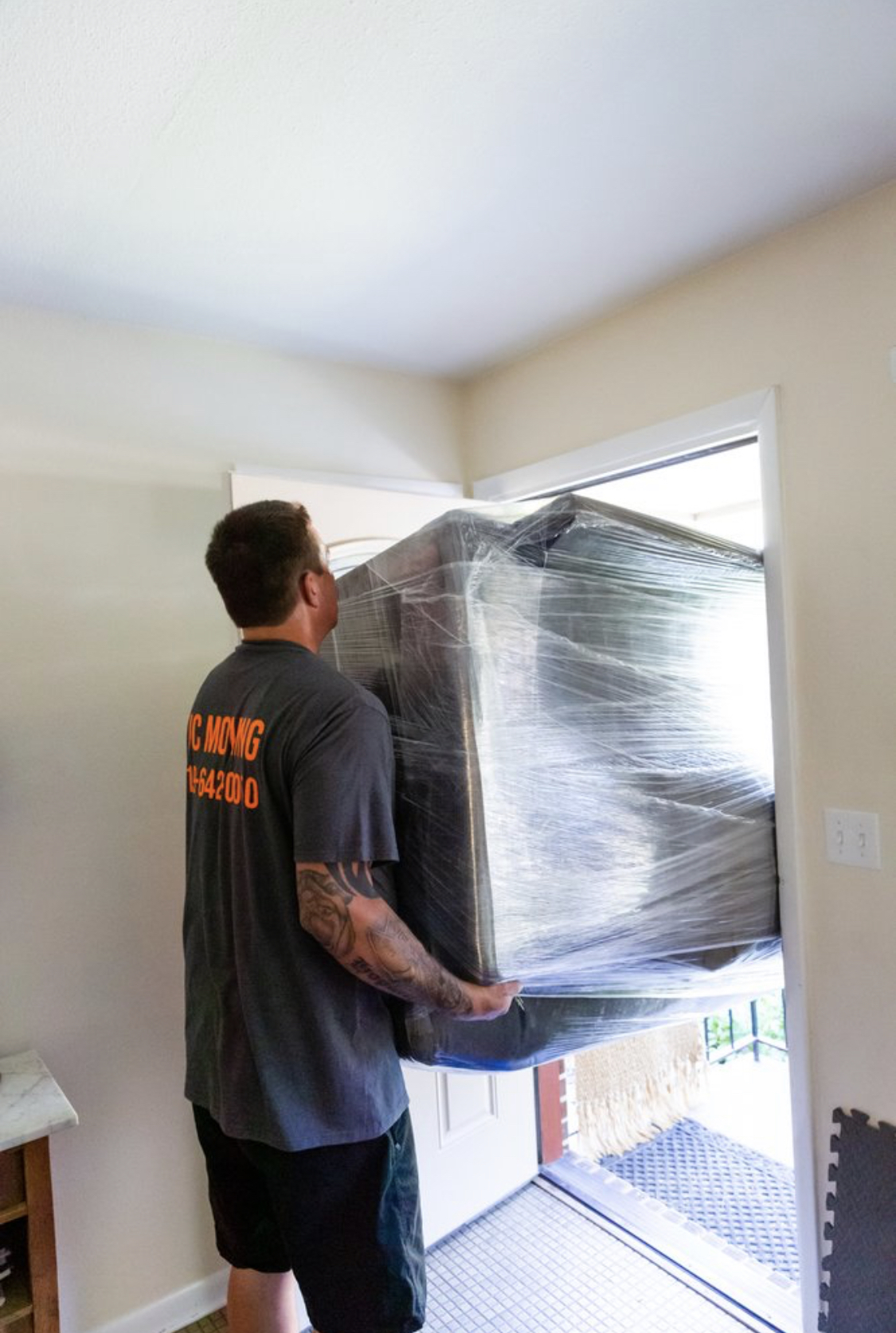
I’ve seen DIY moves unravel around staircases and narrow hallways more than anywhere else. Furniture rarely fits in a straight line. Professionals break down sectionals into individual seat units, pop doors off hinges, protect banisters with blankets, and use shoulder harnesses to keep weight close to the body. Those details make the difference between an intact antique and a chipped corner that will nag you every time you sit down to dinner.
When DIY works beautifully
If you’re moving a studio or one-bedroom, have flexible timing, and can recruit two reliable friends, DIY can be efficient and even satisfying. It’s also a fit if you live on the first floor, have straight-path access to a driveway, and own mostly flat-pack furniture. Moves within a mile or two are forgiving: you can shuttle a few loads in a car over several days and save the rental truck for the big pieces.
Packing is the part of the process that rewards methodical people. If you start three weeks out and pack a few boxes each night, you avoid the scramble that triggers broken glasses and mystery bins. Make a simple rule: every box gets a room label and a two-word content tag, like “Kitchen - https://www.homelovemovers.com/arizona/mesa/ baking pans” or “Office - cords.” That habit alone cuts your unpacking time in half and keeps your friends from asking where the coffee filters went on moving morning.
The limits of DIY show up with pianos, glass-front hutches, marble table tops, and anything wider than 32 inches or taller than seven feet. Those numbers come from door widths and ceiling heights in older homes. Measure before you commit. If the sofa can’t clear a turn, you either take the legs off or call someone who can.
Where professionals earn their fee
Good movers have a tight grip on logistics. They ask about truck clearance, stair count, elevator reservations, and loading zones. They bring enough pads to wrap your house several times over, a box of door jamb protectors, floor runners for high-traffic paths, plus tools for basic disassembly and reassembly. They build box walls in trucks that distribute weight, prevent collapse, and let the crew unload rooms together at the destination.
Crews that specialize in residential moving understand the rhythm of a home. Pictures come down early, beds last, and the coffee maker rides in the front seat of the truck for quick access. There are patterns to how to stage a load in a split-level vs. a third-floor walkup. A seasoned lead can look at your living room and tell you how many hours the day will take, which hallway will need a pivot, and whether the dining table base wants to travel upright or on its edge.
I watched a team clear a Scottsdale townhouse in August heat without a single wall nick. They staged a water cooler under the shade of the garage, rotated lifters every twenty minutes, and kept the pace steady. The only reason it looked easy was practice. It wasn’t. That’s what you pay for.
A note on local context: local residential moving Mesa and beyond
Local residential moving in Mesa shares all the problems of any urban area with a few extras. Summer heat means glue on packing tape softens if boxes sit in a hot truck for hours. Asphalt can reach temperatures that soften plastic casters on furniture dollies. Many neighborhoods have HOA rules that restrict street parking or loading times, and a surprising number of driveways have low ornamental trees that snag tall box trucks. If you’re planning local residential moving in Mesa, scout the path from truck to door and trim what you need to trim the day before. If the move crosses parts of the Valley with construction detours, expect a longer drive time than the map predicts.
Professional crews familiar with the area carry extra water, start early, work in shade when possible, and finish the heavy lifts before noon. That’s not a luxury, it’s safety. For DIY moves, plan for more breaks than you think you’ll need and store your electronics in the cab with the air conditioning on. Heat is not kind to monitors or televisions.
Pricing clarity without the gimmicks
It’s tempting to look for the lowest hourly rate and hope for the best. The honest test is how a company builds an estimate. A meaningful quote should reflect inventory, access details, and any unusual items. It should call out stair carries, long carries, and any need to shuttle items if a truck can’t get close to a door. It should spell out what “arrival window” means and whether time starts at the warehouse or your doorstep.
If you handle the move yourself, write your own estimate. Put numbers to your boxes, tape rolls, wrap, and pad needs. Budget for extra fuel if you’re crossing town twice, and add a line for a hotel if a long-distance DIY move runs long and you need to stop. That kind of planning turns the unknown into something you can manage.
Where Bulldog Movers fits in your decision
How Bulldog Movers approaches residential moving
Bulldog Movers has built a rhythm around Arizona homes, both new builds and older properties with tight turns and delicate trim. As a local residential and commercial moving company serving Arizona, they understand HOA rules, summer heat, and the way certain neighborhoods bottle neck on weekends. I’ve watched crews from Bulldog Movers protect a white-painted staircase with neoprene pads and layered blankets, then run floor runners from the front door to the garage so traffic didn’t grind grit into the hardwood. That kind of forethought keeps move-out inspections friendly.
A common scenario goes like this: a couple in Tempe sells a townhome with a closing date on Friday and a new build in Mesa that won’t be released until Monday at noon. Bulldog Movers plans for a two-stage move with short-term, overnight storage, schedules an early Friday arrival, and coordinates the Monday delivery to hit after the builder walk-through. The couple never double-handled a single box. That is the value of choreography that ties logistics to real estate timing.
When Bulldog Movers is the better call than DIY
I tend to steer people toward Bulldog Movers when one of three things shows up. First, fragile or irreplaceable items, especially anything with glass, stone, or hand-carved detail. Second, difficult access: third-floor apartments without elevators, split staircases, or narrow 1920s hallways. Third, timing constraints that leave no margin for error, like back-to-back closings or elevator reservation windows that can’t shift.
In one case, a family needed local residential moving from a single-story in Gilbert to a two-story in Mesa. The larger pieces included a 400-pound upright piano and a glass-front china cabinet with leaded panes. Bulldog Movers sent a foreman who measured both doorways and the turn radius at the bottom of the new staircase, then staged the cabinet upright in the truck with a custom pad wrap and corner protectors. The piano traveled on a piano board with a strap pattern that locked the castors in place. The crew rebuilt the dining room first so the family could host a small dinner that night. That sort of sequencing matters at the end of a long day.
The hidden labor: packing, prep, and loading strategy
Packing drives the efficiency of the whole move. Professionals pack tight, not heavy. Kitchen boxes rarely exceed 40 pounds and gain structure from stackable items like plates and bowls. Books ride in small boxes that keep weight manageable. The rule of thumb is simple: if you can’t lift it easily, it is too heavy for the person on the other end of the staircase.
Wrap matters. Bubble wrap has its place with glass and electronics, but paper does the heavy lifting for most kitchenware and framed art. Furniture blankets protect not only furniture, they protect walls and doors from handles and edges. When loaded right, blankets create friction points that keep stacks from slipping during braking.
Loading strategy converts a chaotic house into a clean truck. Pros build tiers, use tie-downs to lock tall items, and keep weight low. They avoid empty spaces behind sofas by sliding mirror boxes or flat art into the gap, then pad the contact point. They place mattresses against the walls, strap them, and keep them out of harm’s way. None of this is magic, but it is disciplined.
Safety, injuries, and the physics problem
A move is a physics test you didn’t know you were taking. A six-foot dresser pivoting down a flight of stairs wants to rotate out and away. Two untrained people will try to muscle it, overextend, and lose leverage, which ends with a fist-sized dent in drywall or a strained lower back. A moving strap shifts the load to your shoulders and keeps the weight centered. A third person can spot the turn and call out the pivot in plain language: “Left side down two inches, rotate toward the rail, stop.” When a professional crew moves in concert, you hear a cadence. That shared rhythm prevents mistakes.
Heat compounds risk. People get tired, grip strength fades, and steps blur. I’ve seen more ankle sprains at the end of hot days than at the start. Good crews rotate roles and enforce water breaks. DIY teams should do the same. Gloves matter. So do shoes with real tread. Do not move in sandals. It sounds obvious until someone tries it.
Decision points that actually matter
Instead of a list of vague pros and cons, test your situation against a few hard questions:
- How complex is your access at both locations? Count stairs, measure doorways, and note parking distance to the entry. What is the total volume of your belongings? If you can’t fit it in a 15 to 20-foot truck in one shot, think twice about DIY. Do you own high-value or fragile items that would be expensive or impossible to replace? How tight is your timeline? If you have same-day keys on both ends and an elevator window, a professional crew reduces the risk of costly delays. What is your physical capacity and that of your helpers? Be honest. A single injury costs more than a moving crew.
If most answers favor simplicity, flexibility, and low risk items, DIY can shine. If any answer exposes a narrow margin, catch it early and bring in help.
A grounded look at hybrid moves
The smartest moves I see blend DIY and professional services. You pack non-breakables yourself — linens, clothes, pantry — and let movers pack the kitchen, art, and electronics. Or you hire a crew to handle the big pieces and truck loading, then you shuttle boxes in your car over a few evenings. In the Mesa area, that hybrid approach works well because short drives make it easy to break the move into manageable parts without wasting time in traffic.
Hybrid moves also help with budget. Many residential moving companies offer partial packing by the hour. You set a limit, say four hours focused only on the most delicate rooms, and reap the safety benefit where it counts. The crew brings the materials and leaves you with labeled boxes that can go straight to the new kitchen.
What you learn from a seasoned crew
I like walking behind a professional lead for the first ten minutes on site. They scan the house, note the tallest and heaviest items, and identify choke points. Then they build a path. Doors come off hinges where needed, doorways get padded, railings get blankets. Small items disappear first to create staging space near exits. Furniture is disassembled more than most DIY folks expect: bed frames, mirror brackets off dressers, kitchen tables separated from bases. The goal is simple geometry: reduce dimensions to fit tight spaces and reduce weight to protect both people and property.
Bulldog Movers crews follow this pattern with a particular attention to staging. In one Phoenix-to-Mesa move, they built a “launch pad” inside the garage using stacked pads so every piece crossing the threshold was wrapped, tagged, and ready to load. That blocked heat from getting into the house, kept the floor clean, and created a steady conveyor rhythm. Little things, big difference.
Special cases: seniors, pets, instruments, and plants
Senior moves often involve downsizing and a tight emotional timeline. The best approach is slower packing with clear labeling that reflects how the person lives, not how a catalog would. Label a box “Favorite mugs by the sink” and place it first on the new counter. Keep a small suitcase with medications, glasses, hearing aid batteries, and a two-day supply of clothes. Professional teams used to senior moves handle these details almost automatically. DIY teams can mimic the approach with a simple rule: pack the new home’s first 48 hours in a clearly marked set of boxes and bags that never leave your car.
Pets need predictable spaces. Crate them during loading and unloading, and keep food and familiar bedding accessible. Avoid leaving them in the yard with gates open and movers coming and going.
Instruments travel best with cases and stable temperatures. Pianos demand pros. Guitars want the cab, not the cargo space, if the day is hot. Plants hate heat and drafts. If you can’t move them in your own car, accept that some may not make it, or plan to gift them and buy new ones after you settle.
Local residential moving and the Mesa maze
Neighborhoods around Mesa vary. Downtown apartments can have tight alleys and small elevators. Suburban cul-de-sacs leave little turnaround room for long trucks. Newer communities sometimes restrict street parking during construction, which can force long carries of 150 feet or more from truck to door. Those details turn a three-hour move into five. If you’re planning local residential moving in Mesa, ask about any HOA documents that govern move hours, elevator pads, or dock bookings. Snap photos of your building’s loading area and share them with whoever is moving you, even if that is your cousin and a rented truck. Information protects your schedule.
A brief, focused checklist for either route
- Measure large items and key doorways, note stair turns, and plan disassembly. Build an essentials kit: tools, chargers, medications, two days of clothes, basic kitchen items. Stage packing by room with clear labels, and cap box weight at 40 pounds. Protect floors and doorways before the first piece moves. Confirm parking and access on both ends, including elevator reservations and HOA rules.
Keep that list visible on moving day. The reminder about floor protection alone saves dozens of headaches.
Expectation setting for a calm move day
Moves go sideways when expectations are fuzzy. If friends are helping, set start and end times and keep tasks clear. One person stays at the old home for a final sweep and to handle hand-off with a landlord or buyer’s agent. One person goes ahead to the new place to direct furniture placement. If a professional crew is on site, designate a single point of contact who answers questions and confirms where items go. Tape floor plans to walls in each room if you have time. That small step reduces repeated “where should this go” by half.
For timing, even well-run moves have natural pauses: elevator waits, furniture reassembly, and last-minute packing for items you needed the morning of. Build that slack into your mental model, and it feels like part of the plan, not a delay.
Final perspective: choose the path that protects what matters most
There is pride in a successful DIY move. There is also relief in watching a crew manage the weight, the geometry, and the schedule with practiced care. If your home is compact, your timeline flexible, and your belongings durable, a DIY approach can save money and offer control. If your path is tight, your schedule unforgiving, or your items fragile, professional moving services pay for themselves in avoided damage and stress.
Bulldog Movers represents the kind of operation that makes the professional route feel like a smart trade, not a luxury. Their familiarity with Arizona’s climate and neighborhoods, plus the day-to-day muscle memory of residential moving, shows up in small protections and big decisions. Whether you choose full-service help, a hybrid plan, or a carefully organized DIY effort, anchor the choice to the realities of your home and your limits. Moves reward honest assessment and disciplined execution. The rest is simply boxes, tape, and a clear path to the door.